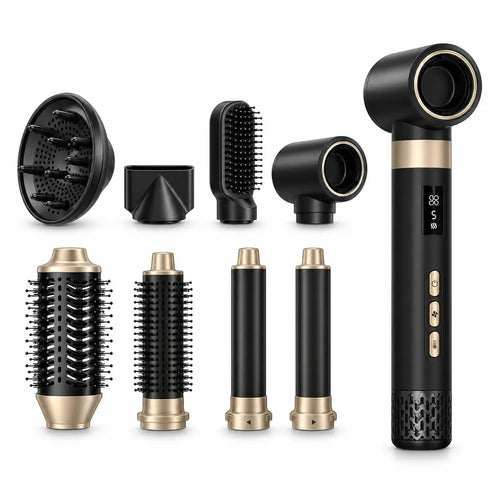
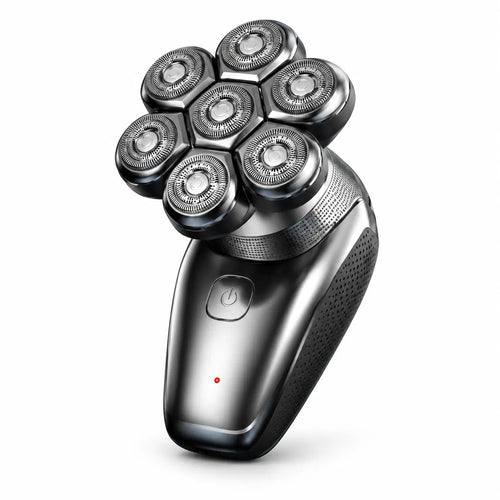
An Engineering Comparison of Motor Design, Blade Materials, Battery Capacity and PCB Configuration.
Introduction: Similar Appearance, Different Internal Components
Why does one hair clipper sell for around $10, while another costs only $7?
At first glance, the two products look quite similar. Both feature sleek ergonomics, standard black grooming enclosures, and familiar cordless form factors. However, after taking them apart and comparing their internal assemblies side by side, substantial engineering differences become immediately apparent.
In this teardown, we compare two budget hair clippers originally sold in the Chinese domestic market for RMB 69 (approximately US$10.36) and RMB 49 (approximately US$7.36) based on an exchange rate of 1 CNY ≈ 0.1501 USD. (Note: these represent domestic retail benchmarks used for component-level cost teardown, not overseas export FOB or retail quotes.)
Rather than focusing on surface exterior styling or marketing claims, we systematically examine four critical hardware assemblies:
- Motor: Core motor volume, copper winding density, and torque output under load
- Battery: 18650 cell chemistry, nominal energy, and marked capacity ratings
- PCBA: MCU control architecture, battery management ICs, and numeric display integration
- Cutting Blade: Ceramic moving blade vs. conventional stamped stainless steel construction
The objective is to provide B2B brands, sourcing directors, and product development managers with clear visibility into how component selection drives Bill of Materials (BOM) cost, field reliability, and the engineering specifications you must verify before issuing production orders.

Figure 1: Complete exploded teardown overview of the $10 (RMB 69) and $7 (RMB 49) hair clippers.
1. Motor: A Noticeable Difference in Core Size and Torque
The first and most critical mechanical difference appears inside the drive unit.
After opening the two injection-molded chassis, we found that the $10 (RMB 69) model uses a noticeably larger DC motor (~37 mm length × 24 mm width) compared to the compact drive unit in the $7 (RMB 49) model (~30 mm length × 16 mm width). The visual difference in rotor volume and magnetic core footprint is immediately apparent when placed side by side.
Based on our component-level cost model, the larger motor in the higher-priced sample carries an estimated manufacturing cost of approximately RMB 5 (US$0.75), utilizing tighter copper windings and thicker casing for superior thermal dissipation during extended operation.
However, motor dimensions alone do not tell the entire performance story. When sourcing hair clippers from Chinese manufacturing partners, procurement teams should require verified lab data on the following parameters:
- Rated Voltage & Operating Current: Loaded current draw under simulated hair resistance
- Motor Speed Under Load: RPM stability from 100% to 20% battery state-of-charge
- Stall Torque & Dynamic Torque: Ensuring the cutting teeth do not pull or snag coarse hair
- Temperature Rise: Continuous 30-minute thermal rise on the outer grip casing
- Acoustic Noise & Vibration: Operating dBA and harmonic resonance levels
- Operating Life Cycles: Accelerated life testing exceeding 300+ continuous duty cycles

Figure 2: Drive motor comparison — larger core volume and copper winding density vs. compact budget motor.
2. Battery: 1800mAh vs. 800mAh Rated Energy Density
The second major divergence is the energy storage subsystem.
Both devices incorporate cylindrical 18650 lithium-ion cells with identical physical outer dimensions (~18 mm diameter × 65 mm length), but their rated energy density and marked capacities diverge dramatically.
| Specification | $10 Model (RMB 69) | $7 Model (RMB 49) |
|---|---|---|
| Battery Format | 18650 Cylindrical Li-ion | 18650 Cylindrical Li-ion |
| Nominal Voltage | 3.7V | 3.7V |
| Rated Capacity | 1800mAh | 800mAh |
| Nominal Energy | 6.66 Wh (2.25×) | 2.96 Wh |
Based on printed cell specifications, the higher-priced sample provides 2.25 times the nominal energy capacity of the budget alternative. In practical use, this translates to over 150+ minutes of runtime versus ~45–60 minutes before cutting speed deteriorates.
OEM Sourcing Note: A cell label alone is not a guarantee of real-world performance. In low-cost procurement channels, 18650 cells often experience capacity downgrades or lack balanced BMS protection. We strongly advise buyers to enforce automated 0.2C/0.5C constant-current discharge testing and weigh cell samples during pre-shipment inspections (grade-A 1800mAh cells typically weigh ~38–42g, whereas sub-1000mAh cells weigh under 30g due to reduced active electrode material).

Figure 3: 18650 Lithium-ion cell comparison — 1800mAh (6.66Wh) vs. 800mAh (2.96Wh).
3. PCBA: Digital Display, MCU Intelligence and Power Management
The third major difference is located on the main electronic control board (PCBA).
The $10 (RMB 69) sample features a full-length multi-stage PCBA equipped with:
- Digital 7-Segment LED Display: Real-time percentage readout for battery remaining, Turbo mode, and oil lubrication reminder
- Dedicated MCU Controller: Regulating motor PWM output, multi-speed throttling, and soft-start ramp
- Dedicated Power Management IC (4060 class): Handling overcharge, over-discharge, short-circuit, and USB-C input step-down
- Denser Passive Component Count: Filtering capacitors and transient voltage suppressors (TVS) on the charging input
In contrast, the $7 (RMB 49) sample utilizes an ultra-minimal single-layer PCB with basic routing, an entry-level SOP-8 control chip, no LED display, and minimal input protection.
In terms of electronic Bill of Materials (eBOM), the digital MCU board costs nearly 3.5× to 4× as much as the minimalist board. For Western markets requiring CE, FCC, UL 2085, and RoHS certification, having comprehensive overcurrent and thermal cutoff circuits on the PCBA is essential to prevent costly port customs rejections.

Figure 4: PCBA architecture comparison — dedicated MCU & digital LED display vs. basic single-stage control board.
4. Cutting Blade: Wear-Resistant Ceramic vs. Stamped Metal
The fourth key difference lies in the cutting head architecture and blade material.
The $10 (RMB 69) model incorporates a zirconia (ZrO2) ceramic moving blade paired with a precision-ground stainless steel stationary comb. The $7 (RMB 49) model employs an all-metal stamped carbon/stainless steel cutter assembly.
Engineering Pros and Cons of Ceramic Blades:
- Hardness & Edge Retention: Zirconia ceramic features a Mohs hardness of ~8.5 (far higher than hardened steel at ~5.5–6.0), allowing the cutting edge to stay razor-sharp significantly longer.
- Low Thermal Conductivity: Ceramic transfers less friction heat during continuous high-speed oscillation, keeping the blade cool against sensitive skin.
- Corrosion Immunity: Impervious to water wash and bathroom humidity rust.
- Trade-off (Brittleness): Ceramic is brittle and susceptible to chipping if dropped on hard bathroom tile floors; proper spring tensioning and cushioning guide channels are mandatory.
The estimated manufacturing cost of the ceramic cutting head assembly is approximately RMB 6 (US$0.90). For grooming brands, specifying ceramic vs. stainless steel is a crucial product differentiation lever that commands higher retail price margins.

Figure 5: Cutting head comparison — self-sharpening ceramic moving blade vs. conventional stamped metal blade.
5. What Explains the $3.00 Price Difference?
Between RMB 69 ($10.36) and RMB 49 ($7.36), there is a retail delta of RMB 20 ($3.00). Our component teardown maps directly to where that manufacturing budget was invested:
| Sub-Assembly | $10 Model (RMB 69) | $7 Model (RMB 49) | Sourcing Impact |
|---|---|---|---|
| Drive Motor | ~37×24mm High-Torque Motor (~$0.75) | ~30×16mm Budget Motor | Higher cutting power, less stall on thick hair |
| Li-ion Battery | 1800mAh / 6.66Wh (Grade-A cell) | 800mAh / 2.96Wh | 2.25× longer runtime per charge |
| PCBA & UI | Digital LED readout + MCU + PMIC (~4× cost) | Basic single-stage control PCB | Superior UX, battery monitoring & circuit safety |
| Moving Blade | Zirconia Ceramic blade (~$0.90) | Standard Stamped Stainless Steel | Stays sharp longer, runs cooler against skin |
Beyond these four visible assemblies, additional structural differences such as ABS casing wall thickness, guide comb injection tolerances, packaging box rigidity, and factory QC burn-in cycles contribute to the overall FOB quote.
6. What Should Buyers Check Before Sourcing Hair Clippers?
For OEM/ODM brand owners, Amazon private label sellers, and retail importers, evaluating hair clipper factories requires moving past superficial catalog mockups. Here is our 5-point verification checklist:
- Motor Verification: Request motor data sheets and measure loaded RPM, stall torque, and temperature rise after 30 minutes of continuous run.
- Blade Material & Alignment: Verify whether moving blades are genuine zirconia ceramic or low-grade white plastic composites. Inspect tooth alignment tolerances under an optical comparator.
- Battery Capacity & Protection: Conduct actual 0.2C/0.5C constant-current discharge tests on cell samples. Verify that the battery pack includes low-voltage cutoff and thermal protection.
- PCBA & Compliance Standards: Inspect solder joint quality, MCU firmware stability, and EMC filter circuits to guarantee compliance with CE, FCC, UKCA, and RoHS requirements.
- End-to-End Reliability Testing: Perform drop testing from 1.0 meter, continuous 100-hour duty cycle endurance, and acoustic noise verification in an anechoic chamber.
Conclusion: Look Beyond the Exterior Shell
Two personal care products can look nearly identical on the outside while differing fundamentally on the inside. Understanding motor sizing, cell capacity, circuit layout, and blade metallurgy is the key to protecting your brand reputation and avoiding costly field returns.
At RYVO, we help global personal care brands, distributors, and product development teams navigate Chinese supply chains with hands-on teardown audits, BOM optimization, and engineering-led manufacturing coordination.
Developing your own hair clipper or personal grooming product line?
Start Your Project Review →